



Best Patek Philippe Calatrava Replica Watches
Among all Patek Philippe collections, the Calatrava is the one that seems the most understated at first glance, yet becomes more appealing the longer you look at it. It is not sporty and attention-grabbing like the Nautilus or Aquanaut, nor does it rely on a busy dial or complicated functions. It is simply a pure round watch — perfectly round, quietly slim, and effortlessly refined.
Introduced in 1932, the Ref. 96 marked the beginning of the Calatrava line. For more than ninety years, this collection has remained the benchmark of the classic round dress watch and a true symbol of Patek Philippe elegance and restraint.
NTVWATCH carefully selects Calatrava replica versions through factory-direct channels, hoping to bring this piece of minimalist wrist elegance to you in a more accessible way.
Calatrava
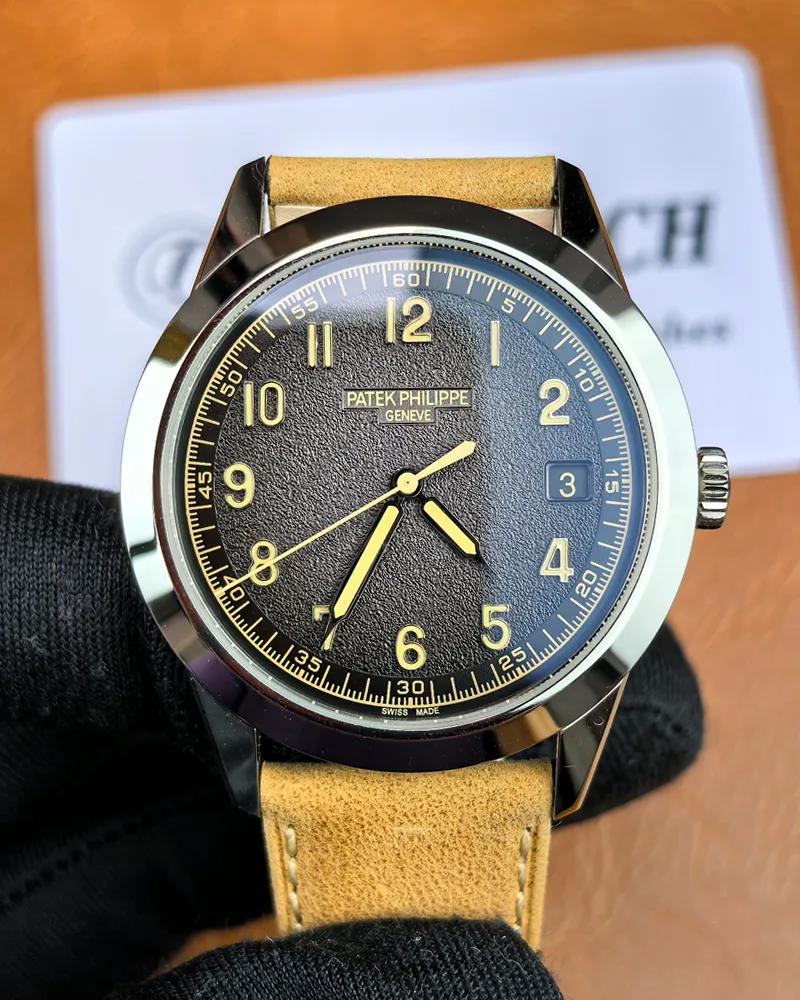
patek philippe 5226g-001 Calatrava Gray Dial 18K White Gold Replica Watch
In stock
Original price was: $1,020.00.$720.00Current price is: $720.00.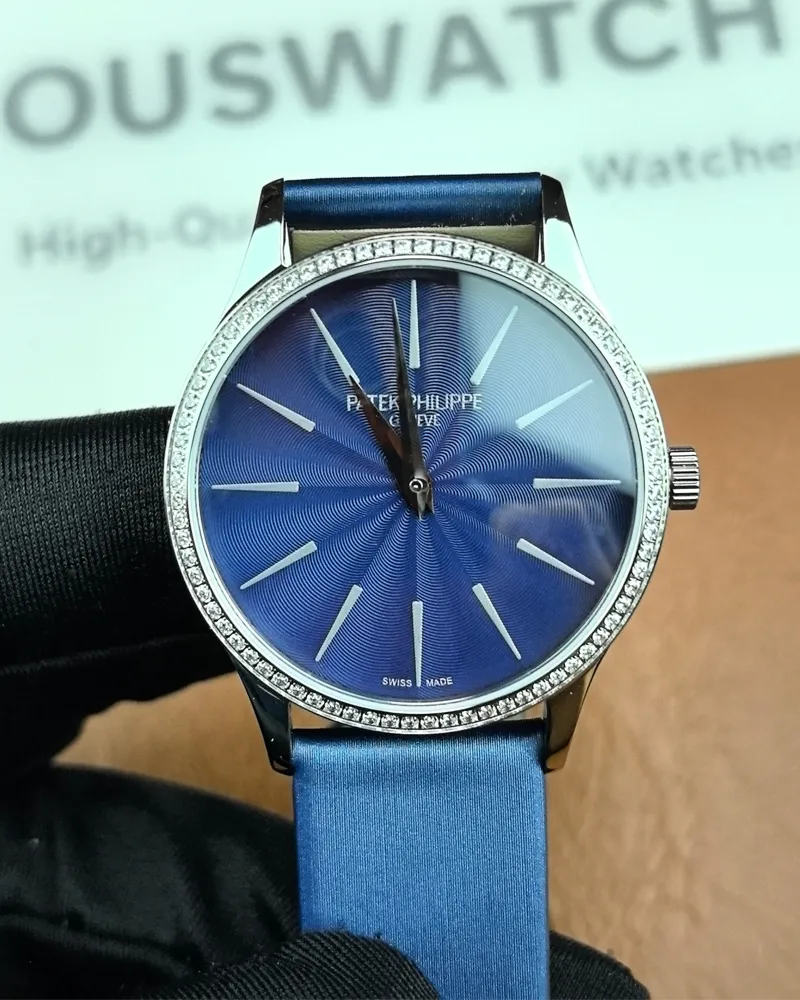
Patek Philippe Calatrava 4897g-001 33mm Blue Table Diamond Case Women’s Replica Watch
In stock
Original price was: $880.00.$580.00Current price is: $580.00.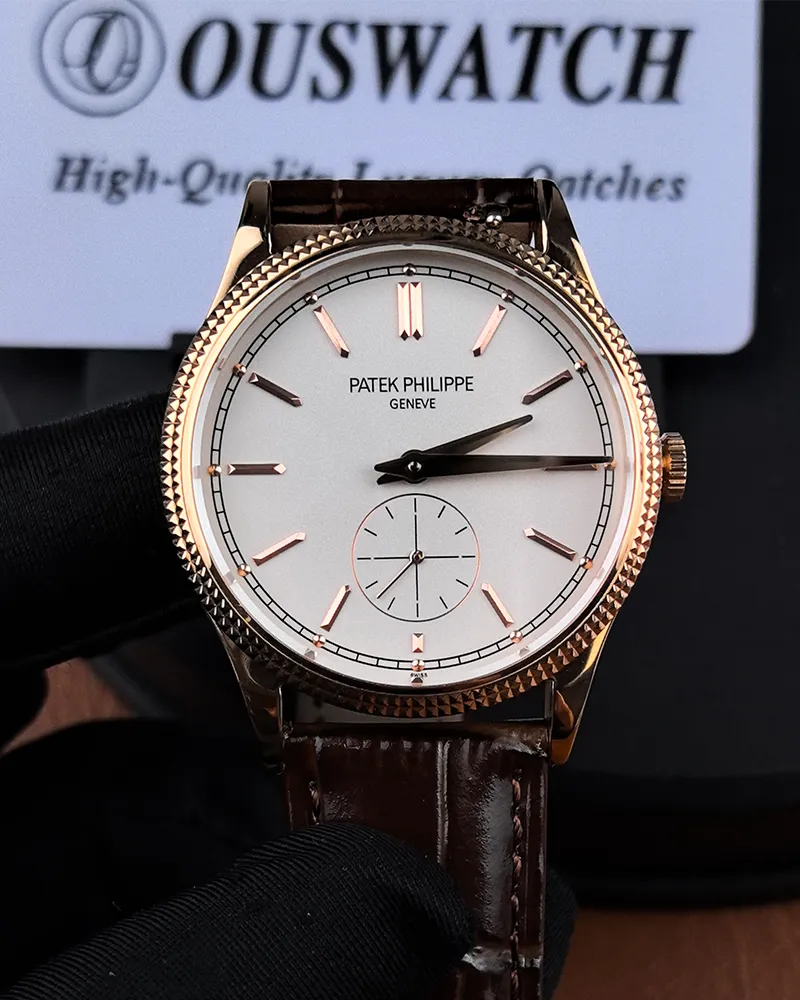
Patek Philippe Calatrava 6119R-001 Rose Gold 39MM White dial Replica Watches
In stock
Original price was: $980.00.$680.00Current price is: $680.00.Instant Recognition: Round Case, Clous de Paris, and the Calatrava Cross
The Calatrava became the benchmark for round dress watches thanks to several signature design elements that have endured for generations:
- Round case, pure geometric beauty:
The Bauhaus philosophy of “form follows function” can be seen in every proportion of the Calatrava. Its long, gently curved lugs and slim yet refined bezel together create an almost perfect visual balance. Replica versions likewise use stainless steel or precious metal-style materials, with case proportions carefully restored and thickness controlled around 8mm, allowing the watch to slide naturally under a shirt cuff. - Clous de Paris hobnail guilloché:
One of the most recognizable decorative features of the Calatrava. Its origins can be traced back to the Ref. 96D from 1934, while the Ref. 3919 released in 1985 made this decoration one of the most iconic visual signatures in the Calatrava world. Replica versions also reproduce this classic guilloché engraving detail. - Calatrava Cross:
The name itself is deeply connected to the Patek Philippe emblem. The Calatrava Cross originates from the heraldic cross of the 12th-century Spanish Order of Calatrava, and Patek Philippe officially registered it in 1887. Wearing it on the wrist is, in itself, a discreet statement of brand heritage. - Small seconds layout and clean dial:
A Calatrava dial never includes unnecessary elements. The small seconds display, with the seconds hand placed in a separate subdial at 6 o’clock, is its most classic face. In replica versions, the hands and hour markers are finely reproduced, while dial textures and scales are made in line with the original design standards. - Sapphire crystal display caseback:
Most modern Calatrava models come with a transparent caseback, allowing the wearer to admire details such as Geneva stripes, gold rotor finishing, and beveled edges of the movement. Some early historical officer-style models use a solid caseback instead of a sapphire display back. Replica versions follow the correct caseback structure according to the specific model. - 30 meters of everyday water resistance:
As a dress watch, the Calatrava offers 30 meters of daily water resistance, enough for commuting, hand washing, and light rain. Replica versions continue this same practical positioning.
Who Is It For? Three Typical Wearing Scenarios
The Calatrava is more like the watch that does not need constant attention from others, but rewards you every time you glance down at your wrist.
- Business commuting and formal occasions:
Tailored suits, textured ties, French cuff shirts — in those situations where refinement matters, the Calatrava never steals the spotlight, yet never feels absent. It is the ideal dress companion and a quiet expression of professional taste. - A “light formal” option for daily wear:
Even without a suit, a quality knit sweater or a casual blazer pairs naturally with a Calatrava. It is warmer and more refined than a sports watch, and more substantial and timeless than a smartwatch. - A silent conversation between people who understand watches:
A Calatrava does not need a two-tone bezel or a complicated function to draw attention. At a watch gathering, a second glance from another enthusiast already says enough. That is the quiet confidence of a Patek Philippe dress watch, and the understated power unique to the Calatrava.
How to Choose: Size, Dial, Lug Details, and Strap
Choosing a Calatrava may seem simple, but the real differences lie in a few key details. The replica market is usually centered on steel versions, and the model references below are based on original Patek Philippe specifications for easier comparison.
1. Size: 33mm, 35mm, 38mm, 39mm, 40mm
Different eras of the Calatrava follow different size logic, but the selection logic itself is simple:
- 33mm–35mm:
Classical sizing. Ref. 96 (originally around 31mm) and Ref. 3919 (around 34mm) fall into this category. Best for those who prefer vintage proportions or have slimmer wrists. - 38mm:
The golden middle ground. Ref. 5296 and Ref. 5196 (around 37mm) sit in this range, making it one of the most ideal modern Calatrava sizes for most wearers. - 39mm–40mm:
Contemporary larger sizing. Ref. 5227, Ref. 6119 (39mm), and Ref. 5226G-001 (40mm with a thickness of only 8.53mm) represent the mainstream modern Calatrava size. On the wrist, they offer enough presence without ever feeling out of place as dress watches.
In one sentence: 38mm is the safest starting point, while 40mm feels more modern.
2. Dial Styles — Where Calatrava Aesthetics Show the Most Difference
- Pure black lacquer dial:
Such as the Ref. 5227G-010, whose black lacquer dial is deep enough to reflect light like a mirror. Combined with a white gold case, it feels restrained yet powerful. - Silver-white or ivory sunburst dial:
The most classic Calatrava look. Easy to pair with any material and suitable for any occasion, it is the most timeless choice. - Charcoal gray textured gradient dial:
Such as the Ref. 5226G-001 , which features a charcoal gray granular-textured dial with a black gradient edge. Inspired by vintage camera bodies, it adds a subtle modern tone to an otherwise traditional dress watch. - Special models with a Clous de Paris hobnail bezel:
Such as the Ref. 6119, whose bezel is decorated with the finely crafted Clous de Paris pattern. This is currently one of the most recognizable visual signatures in the Calatrava family. - “Carbon-style” embossed dial (Ref. 6007G):
The three Calatrava 6007G models released in 2023 use a distinctive embossed dial pattern resembling carbon fiber, paired with yellow, red, or blue accents on the markers and hands. They retain the dress watch foundation while introducing a subtle sporty touch.
3. Lug Details — Easy to Overlook, but Often the Best Way to Distinguish Models
- Classic straight lugs:
The most common Calatrava design. Clean, sharp, versatile, and timeless. - Officer-style caseback / dust cover:
The Ref. 5227 retains a hinged officer-style dust cover on the back of the case. Open it, and you can admire the movement through the sapphire display back; close it, and the watch returns to the look of a classical officer’s watch. This is a detail that many enthusiasts pay special attention to when choosing a replica. At the same time, some earlier historical officer-style models use a solid caseback rather than a transparent one. - Openworked fan-shaped lugs:
More commonly found on Calatrava Travel Time or more complicated models, offering a stronger sense of design.
4. Strap and Materials
- Alligator leather strap:
Black or dark brown remains the safest choice. Two clasp options are usually available: a pin buckle for a thinner, more vintage feel, or a folding clasp for a more modern and convenient wearing experience. - Stainless steel vs. precious metal:
The replica market mainly focuses on stainless steel versions. If you want the feel of white gold, rose gold, or platinum, pay special attention to the corresponding case finishing and model-specific craftsmanship.
5. Movement — No Need to Overthink It, but a Few Key Points Are Worth Knowing
The core of a replica Calatrava lies in visual accuracy — case proportions, dial texture, hand details, and strap comfort matter most. But if you also care about movement logic, the following movement types commonly associated with the Calatrava are useful references:
- Automatic movement (Cal. 324 S C):
Central seconds with a date window. Thickness is about 3.3mm, with a 21K gold central rotor. Representative references include the 5296 and 5227. - Manual-winding movement (Cal. 215 PS):
With a thickness of only 2.55mm, this is one of the most classic movements used in small seconds Calatrava models. Representative references include the 5196 and 5119. - Sapphire crystal display caseback:
Most modern Calatrava models are equipped with a display back. Whether manual or automatic, the movement finishing can usually be admired through the rear crystal, including Geneva stripes, anglage, and the gold rotor where applicable. Some early historical officer-style models, however, use a solid caseback without transparent glass.
Why Has the Calatrava Become the “Textbook of Round Watches”?
In 1932, Patek Philippe introduced the Ref. 96. It was an era when Art Deco flourished and industrial mechanical styling influenced watch design, yet the Ref. 96 went in the opposite direction. Inspired by the Bauhaus principle that function should define form, it used a perfect round profile, carefully judged proportions, and a slim case to establish what a round dress watch should look like.
Patek Philippe later described it as “the very essence of the round watch,” and to this day it remains one of the most important archetypes in the world of dress watches.